Showing posts with label writers. Show all posts

Master Playwright Residency

The Atlantic Center of the Arts in New Smyrna Beach has a master artists in residency program. Residency #142 put students in touch with three talented playwrights, Annie Baker, Heather Woodbury, and Dael Orlandersmith. The Mad Cow Theater opened its doors so these women could discuss what it is like being a playwright in America today. I arrived at the Mad Cow Theater rather sweaty and worn around the edges from several other sketch assignments that day. The lobby was packed and the room hummed with conversations as people enjoyed wine and finger food. There was a table full of name tags and I didn't see my name. This was a much bigger event than I expected, and for a moment I thought I might not get in.

Exhausted I sat on the windowsill and observed all the excitement in the room. I heard a woman say, "let me grab my wine." She reached behind me and grabbed a cup. I had almost sat on it. Thank god it didn't spill. A young woman sat next to me to relax. Mitzi, a perky young mom, started talking to her and I discovered I was sitting next to Annie Baker, one of the playwrights. Mitzi was talking about one of her children and Annie who is 30 wondered if she would ever have time for a family. Mitzi's husband, a handsome man in a light suit and dark spiked hair joined the conversation. He thought Annie was just in her mid twenties and he said, "You look too young to have written five plays."

The cow bell rang letting everyone know it was time to enter the theater. Peg Okeif was the moderator. The Mad Cow Theater will be moving this year to Church Street Station which will put it in the midst of all the new nightlife being generated thanks in part to the new arena. Excerpts were performed from each of the three women's plays. I discovered that I was seated next to all the actors who performed that night. I moved aside each time they went on stage to read. Each of the readings had an amazing blend of humor and serious drama. I was left wanting more.

The moderated conversation with the playwrights afterward inspired and charged me. Annie Baker who wrote "Circle Mirror Transformation" said, "Art is about holding up a mirror, that mirror can be smooth and representational or distorted. We try to show what peoples lives are like and what the inner landscape of peoples minds look like. Art is about chronicling." I was surprised when Dael, who wrote Yellow Man, pointed out that several college professors discouraged her writing. Heather had similar experiences. Annie spoke about a professor who wanted to share the true secret of great playwrights. The students leaned forward with bated breath. He said, "The best playwrights are the ones who read the most." Annie noted an alarming flood of people who want to write yet they have no interest in reading. Dael pointed out that the more she reads, the more she humbly realizes what she doesn't know. When asked about the artist as recluse Annie pointed out that she has the best of both worlds. She writes for months at a time alone and focused then she gets to work with the actors offering plenty of interaction. Asked how she knows her play is done, Annie said, "The play is never exactly what I hoped it would be when I started. But even though it might have a swollen eye and be misshapen, I still love it like a child."

Heather Woodbury's plays are created on the web allowing a full view of her creative process. Her serialized ongoing online videos create a world she hopes people will want to return to again and again. She plays every roll. I'm fascinated with the way she is embracing and recreating her art for this new digital medium. There was concern that only the rarefied elite go to plays anymore since ticket prices are so high. Great plays speak to everyone. By the end of the evening I felt a glowing kinship with each of the playwrights. I wish I could have talked to each at length but when the evening ended they were surrounded. I rushed out of the theater after grabbing a card from Heather and walked the streets downtown feeling rejuvenated.

Ellie Watts-Russell

I went to visit the Kerouac House writer in residence, Ellie Watts-Russell, on a warm sunny afternoon. When she writes she cuts herself off from all distractions. The cell phone is turned off the night before and the computer is off to avoid the distraction of Facebook. She was getting close to the end of the novel she was working on, entitled "The Lodge", and and she didn't want to rush to the finish line. Usually when she writes she shares her work with another writer to get his opinion while she reads his work. Since she was working alone at the Kerouac House she spends more time proof reading her work. This is what she was doing when I joined her on the porch to sketch.

Born in 1979, Ellie is a graduate of Andrew Motion's Creative Writing course at Royal Holloway. In 2006 she was appointed Writer-In-Residence at HMP Ashwell, an all male prison in Rutland. She speaks with a charming British accent. A petite hummingbird necklace adorned her neck. We sat quietly for more than an hour as she worked. Her Oxford dictionary and thesaurus were on hand and she occasionally consulted with them. Her Moleskin notebook seemed to bulge at the seems. Her keys, attached to a mountain climbers clasp were partially tucked into her notebook. The glass of ice water sweated as she worked. I can't wait till "The Lodge" hits book stores.

On the Tip of Your Tongue

Mad About Words sponsored a writing workshop with Ellie Watts-Russell the current writer in residence at the Kerouac house. She organized the workshop to explore the power of taste, sound and touch as artistic triggers. The workshop began in the Kerouac house living room where she asked everyone to introduce themselves and point out one quirky fact from their lives. Ellie worked in a men's prison. The man in front of me said the smell of bacon always reminded him of his time in the navy. A woman related that she electrocuted herself in the kitchen once. Every person offered a fascinating taste and I wanted to hear more. An excerpt was read from several authors who explored the senses in their writing. One paragraph was from Jack Kerouac's Darma Bums, where he described his ascent up a rocky mountainside. It was vivid and clear. Ellie had a sweet British accent, and she would acknowledge writing she loved as "Brilliant."

Ellie then asked everyone a series of questions which would help indicate if you were a visual, aural, or tactile author. One question was, after buying an item of IKEA furniture would you,
A. Read the instructions.
B. Ask a friend for advice or
C. Start building and learn as you go.
I was sketching but I am fairly sure I am a visual person. Besides I haven't fully smelled anything since I moved to Florida.

Ellie then invited everyone to the back room of the house. There she had items to stimulate the senses. For smell there was a large Magnolia blossom floating in a clear bowl of water. For touch there was a brown puddle in a paper plate that held it's form when lifted like some primordial ooze. For taste there was some cotton candy which had collapsed in the Florida heat forming compact pancakes of multicolored sweetness. Ellie was mortified and put out some fresh "candy floss" but everyone picked up and tasted the hardened masses. On the wall there were photos. A man pushed a large block of ice. A long line of people struggled up a dune. A young girls face was illuminated by her laptop.

Then everyone sat down to write. Many authors sat outside to enjoy the beautiful day. I finished my sketch as they wrote. I wanted to get home to Terry so I didn't stick around to hear what everyone wrote. I thanked Ellie for letting me sit in and started home. On the drive back I passed a black limo and a hearse. It seemed sad that only two cars followed. Later a gleaming white hearse and limo made a left turn down the Orange Blossom Trail. A large white SUV screeched to a halt in the middle of the intersection and two men in white suits jumped out to direct traffic so that the insanely long line of cars could breeze through. As an artist or author we always hope we can touch many lives with whatever we create. I wondered if my funeral would have one car or a long line in tow. It is a vain glorious thing to ponder but what matters is that I leave something behind, and that I never let my senses grow dull. Howl at the moon and rush off in search of the next sketch.

Reading Between the Wines

Reading between the Wines was a fundraiser for the Adult Literacy League. Sponsored by Bank of America, it was held at the Sheraton Hotel downtown across from the Bob Carr Theater. When I arrived I was given a program and a wine glass. I didn't have time to sample the wines but I placed the wine glass in a pocket of my folding stool just in case. Terry was there chatting with a client. We immediately went to a small private meeting room where Bank of America guests were given a chance to meet and greet Carl Hiaasen.

Carl was born and raised in Florida. He began his writing career as a journalist for the Miami Herald before writing his first book, "Tourist Season" in 1986. Carl's books highlight the many problems faced in Florida thanks to over development. I've read two of his books, "Stormy Weather" and "Basket Case" and they were both hilarious.

Chairs in the meeting room were arranged in groupings of six. It made it seem like there might be group assignments where we had to collaborate and write. I decided to sit on my own over by the cheese and cracker table. Carl spoke to the group directly in front of me for quite some time. Then he sat down for a quick book signing. Everyone lined up. The ten or so people in the room had each been given a copy of Carl's most recent book, "Star Island." I'll read it once Terry is finished. She loves Carl's books and happily posed for photos with him.

I started the sketch in the large hall before the audience filed in. Robyn Austin from WLOQ was the Emcee. She announced as different silent auction tables were closed out with a resonating gong. Joyce Whidden, the executive director of the Adult Literacy League, introduced a short film about what they do. Basically one in five people read at or below a sixth grade level. In Florida that number is even larger. Literacy has the power to reduce crime, unemployment and dependence on welfare. When the film stopped everyone in the room, several hundred people, stood and clapped. It was a heart warming moment that offered the hope that people do care. Perlis, the man who learned to read at the age of 42, was in the audience.

Carl Hiaasen was then interviewed by fellow journalist Bob Morris. Carl pointed out that writing and rewriting his work came easy to him because of the years writing articles for the Herald. He had deadlines for the paper and he would write even if he didn't feel like it. In the question and answer session, Terry asked why the women in his books are so much more mature than the male characters. He explained that men are rather simple creatures that usually just want one thing. The audience laughed. Carl often incorporated real life events into his books. He had found that real life stories are often too bizarre to be believed as fiction. As an example, he pointed to a horrible car accident where a mans leg was severed off. The leg was forgotten. An EMT later found it and decided to feed it to his dog. This is far to sick to be believed.

Elaine Person's Writing Workshop

Elaine Person runs a writing workshop every Wednesday at the Winter Park library starting at 7pm. She also teaches at Saint Lukes for a program called Page 16 0n Tuesdays. Saint Luke's has a 17-year-old School of the Arts. Registration is required. 407-876-4991. This is a separate group. On Sundays at Unity Church, she teaches once a month at 1pm, with no registration required 407-295-9181. The next class is April 10.

She asked me to come in and share a sketchbook and talk about what I do each day, acting as a prompt to help spark the evenings writing session. I always get excited when I get to talk about the amazing stories that cross my path every time I sketch. The writers were then instructed by Elaine to pick a sketch to use as inspiration as they wrote. The room grew silent. No one used a laptop. When it came time for everyone to read what they wrote, I was delighted by the variety. Here was an amazing group of talent. Elaine brings an infectious enthusiasm to the group. Here is just one sample of the work produced that night.

Perspective

Sketching events as they happen
Tom captures the essence of things
He's perched as a careful observer
To give the happenings wings

He's also at times a participant
As the action begins on the stage
He's then a part of the drama
His effect may be tricky to gauge

The concert hall is quiet one moment
There's tension and hopes for the best
The musicians have drilled and have practiced
They're hoping their playing seems blessed

A poet is reading her first line
Tom senses the pause in her voice
She's trying to calm her frayed nerves
So she can continue with poise

A wedding is joyous and crowded
The couple has planned for a year
Tom sketches the concert of vendors
A symphony the couple holds dear

The directors are sharing their visions
Their images, their focus, their light
Will they succeed in condensing a story
And make their vision seem bright?

So what is the role of observer?
He might cause rewriting and changing
Is he audience or co-creator?
Creation is now rearranging.

- Holly Mandelkern

Caitlin Doyle

I met the present resident author of the Kerouac house, Caitlin Doyle, at Rachel Kapitan's reading of her short stories at Neon Forest. We became Facebook friends and after a quick exchange of messages, I arranged to sketch her on a Friday evening after I finished work at Full Sail. I was nervous and excited when I parked in front of the Kerouac house. It was dark outside but a warm light filtered through the 1950s styled curtains. I knocked and the old door shook on its hinges.

Caitlin welcomed me and made her way to the kitchen table where her computer and note pads were set up. She offered me water but I just wanted to get right to work. I explained that the sketch might take a couple of hours and I would be quiet as a mouse. There was some sort of scurrying scratchy noise that came from the kitchen or back of the house. I asked, "What was that?" She got up and went into the dark kitchen looking at the ceiling. "I don't know" she said, "This house makes some strange noises." She was a bit self conscious at first about writing while I sketched. She thought she might not be able to concentrate. She explained that she had been painted by an artist once before, and he talked to himself the whole time which made her want to laugh.

Soon we were both working, lost in the moment. She was working on a series of poems about objects in bottles. The poem she was working on went through multiple drafts. She worked with pencil on paper. Occasionally we both erased and made frantic adjustments. Pencils and pens scratched away in unison. A smoke detector or security device made faint chirping sounds but soon those sounds were erased from my thoughts as the sketch took form. She only glanced at the computer a few times, referring to a thesaurus. There is a shared energy that comes when creative people work together in the same room. This must be what life was like in Victorian times when people gathered in parlors and spent quiet creative time together rather than passively staring at a TV.

Later we had a fascinating discussion on the similarities between our art forms. I explained that creating a sketch on location was much like a jig saw puzzle where all the pieces are constantly in motion not only on a two dimensional plane, but deep in space. I would commit to a puzzle piece and lock it in place in the sketch making compositional adjustments around it. She said poetry is much the same only the pieces are words. Her poems have a predefined rhyme scheme but then she needs to find ways to break up the pattern making it organic and unpredictable. She erased and changed lines until the poem took form, its meaning and depth growing in the process.

After the first sketch was done, Caitlin said she had made serious headway on the poem she was working on called "The Ship." She had been so focused, that she forgot I was there. Since she was comfortable, and we were both getting plenty of work done, I asked if she minded me doing a second sketch. She agreed. I made bolder choices and allowed the second sketch to take form with ease. Caitlin had to review a You Tube video of one of her poetry readings. I leaned forward to listen. Some of the poems were light hearted and fun while others had a dark profound meaning. One poem titled "The Doll Museum" was about the lessons dolls have taught through the ages and the loss of a sister to a surgeons scalpel. Something about the innocent description of the light, lifelike doll followed by sudden loss hit me hard. Later Caitlin let me know she never had a sister. The poem was told from the vantage point of a friend who had lost her sister.

The strength of poetry is that it never feels like fiction, it strips a soul bare unquestioned. Caitlin told me her last name Doyle means black stranger. With her jet black hair and poems that have a sharp cunning edge, the name is a perfect fit. She is reading some of her poems tonight at Infusion Tea (1600 Edgewater Drive, College Park) starting at 7pm. Come on out to what is sure to be a great evening of poetry.

Rachel Leona Kapitan Reading

Rachel Kapitan had a reading from her upcoming book of short stories titled, Small Town Heretics of the Emerging Sciences. I arrived a little early at Neon Forest Art Gallery, and found Rachel seated in the front row in a room full of folding chairs. She took a sip of her Rockstar energy drink. She was reading her manuscript and next to her there was a pile of graph paper note pads with strips of type written copy taped down in rows with yellow stickies protruding everywhere.

I said hello then let her focus on her work while I walked around to see the art in the room. The gallery show was titled, Grab and Go. Every piece of art was on sale for less than $100. Most pieces were around $50. Tonya Dickie entered the gallery and she spoke to Rachael about how clients she gives massages to would sometimes share their darkest secrets while lying on the massage table. Rachel had similar experiences with costumers at Infusion Tea. It is so true that reality is often so much stranger than anything that an author could make up.

Soon the room filled with people. Rachel was talking to another author about Modernism and Post Modernism. She mentioned her ideas about Poetic Terrorism which would wake people up from their complacency. She is developing a literary style she called Synthetic Fiction. It was all way over my head, but I was intrigued. I was introduced to Caitlin Doyle the current resident author at the Kerouac house.

Her first story was a straightforward reading of one of her short stories called "This is not a Beach." The story contained some sexual exploits that would have made Anais Nin blush. What followed was fascinating and unexpected. She had cut up one of her stories into 64 segments which were taped down with 8 segments per page on 8 pages in several graph notepads. She asked members of the audience to pick a number between 1 and 8 for the page of the draft and then a number between 17 and 31 representing the draft of the story which had been reordered 64 times. Based on these random choices, she read the story, titled "Jubilation Saints", out of order. There were sections of the story that would repeat again and again as if the refrain in a song. Rachel said that randomizing the story like this allowed the author a chance to re-experience the work as a reader. Even though the story was randomly shuffled, it always made sense. This story graphically related the sexual affair between two wildlife researchers of squirrels. The repeated attraction played out over and over in the reading as if this couple kept making the same irreversible choices again and again. I began to anticipate and take comfort in the repetition. As a listener I had to fill in the blanks thus personalizing the story in my mind, recreating it for myself. It was a fun exercise allowing the audience to step into the creative process.

Woolite

Mona Washington the author in residence at the Kerouac House, hosted a reading of her one act play Woolite. Mona began as the narrator setting the scene. In a laundry room, a male character played by Dennis Neil, is doing a load of laundry when he stuffs something in his pocket. The female character played by Val Gamble enters. The couple flirts and cuddles affectionately. It becomes apparent that they are a loving married couple. As they hug, Val notices the bulge in her husbands pocket. She pulls out a pair of woman's panties, not hers. What followed was a long argument in which she questions her husbands fidelity. She comes to realize she almost wished he had cheated on her since THIS could not be discussed with anyone. The play was laugh out loud funny at times. For instance she suddenly realized that he must have been a panty thief in college.

The question and answer session after the reading was just as outlandish and funny. As one member of the audience said, "Every rabbit has her habit." During the argument, the husband counters with the fact that she is very loud in bed. Of course she was getting her freak on within the confines of the marrage while he was sniffing other women's panties. How men and women vary in defining infidelity is explored with great comic effect.

There was a going away party for Mona with snacks and wine after the reading. Rachel Leona Kapitan told me a bit about the book she is working on. Scott Donald, one of the partners at Neon Forest, arrived after the reading and told me about how the gallery was doing. Mona and I discussed the possibility of working on a graphic novel together. The story centers around a young college art student who moves to Orlando and discovers the thriving quirky art scene. Who knows where this story might lead?

Mona Washington Reads at Infusion Tea

Monthly author readings have resumed at Infusion Tea. Mona Washington who is the new resident author at the Kerouac House, read from a work in progress. Terry had never been to Infusion before so she asked that I get there a half hour early so we could talk for a while before I started sketching. I got a last minute call that T-shirts I had ordered for the ColORLANDO event were ready to be picked up. I called Terry to let her know I was bound to be late. I parked two blocks away from Mother Falcon, where I had ordered the shirts. I called Terry as I walked and again after I had the shirts in hand. I got to Infusion just as Naomi Butterfield was getting up to the podium to get things started. There was little time for conversation before I got to work. When Mona got up to read, Terry mouthed, "I'm going."
Mona's story had to do with a married couple who no longer knew how to communicate. The romantic spark of their youth had burned out. The husband created a promiscuous mistress in his mind that satisfied his sexual desires whenever he wanted. As Mona said, "They fell into a pattern where they didn't treat each other with even the respect they might show a taxi driver." The couple went to a marriage counselor where they talked about their feelings and how they felt about their feelings. They then fell right back into old established patterns of behavior. The husband hinted at his wife's weight when he suggested she shouldn't have ice cream. She tortured him by licking the ice cream cone with pornographic delight. The only exchanges the couple seemed capable of were clandestine attempts to destroy each other's egos.
After the reading was over, Mona confessed that she needed help resolving issues in the story. I hadn't realized that the man's mistress was imaginary. The sexual exploits were so vividly descriptive, that it seemed more real than the bickering. A discussion followed, but little insight was offered on how things might be structured better. In the break that followed, Rachel Kapitan, who had been serving tea from behind the counter, walked up to Mona and started offering suggestions which the author listened to intently. She was delighted, shouting, "This is much better advice than what I have ever gotten at writing workshops." She jotted down Rachel's number so they could get together and chat some more. Mona's play "The Mason Jar" will be read by the Bleeker Street Theater Company in Greenwich Village in NYC on Monday, October 4th. If you happen to be passing through NYC be sure to check it out.

The Art of the Thriller

Thriller novelist Jamie Freveletti visited the Cagan Crossings Library in Clermont. Her first book "Running from the Devil" was nominated as the best first novel by the International Thriller Writers Association. When I entered the small room, she was talking about research she had done for her second book "Running Dark". This novel is about a cruise ship which is invaded by Somali pirates. To research the book she wanted to talk to cruise directors but they wanted nothing to do with a book about piracy. They said it would be bad for business and she shouldn't write the book. She finally got to talk to a cruise ship captain who was helpful. When she shopped the book around to publishers no one was interested until pirates made the news off the coast of Africa. Suddenly everyone was interested and she landed her deal with Harper Collins.
Jamie and her husband are both long distance runners. When she said she was planning to go to Somalia for research, he said "You can't leave me alone with the kids for that long, I am coming with you." She pointed out that she has always been a woman in a mans world. Her first career as a lawyer toughened her to this reality and now she is one of very few women thriller writers. She is shocked by the stellar success that her books have seen. She got a six figure advance for her most recent book. When asked if she uses an outline to plan her book, she said that she would like the reader to feel the same excitement as she does as she discovers what is going to happen next. Although she has some idea what her protagonist will do, she has no idea how the book will end. She almost excitedly started to tell us what might happen next in the book she is now writing but she held herself in check. Her enthusiasm was contagious.
She offered some advice to aspiring young writers about which publishers to approach when starting out. In all there were maybe 15 people in the small room listening to this talented writer but she was as engaging and excited as if she was addressing a crowd. She is humbles and excited by the success she has worked so hard for. After the talk she signed a few books. I was surprised to find her relaxing in a chair with now one standing around her asking questions. I asked her to sign my sketch.

Silver Fern Writers Workshop

The Silver Fern Writers Workshop (263 Orange Terrace Drive, Winter Park) is held every 2nd and 4th Tuesday of each month. I was invited by Elayne Pierson to come to a workshop to sketch. These workshops are open to anyone from a novice to an accomplished writer working in all genres. The workshop is conducted using the principles of the Amherst Writers & Artists, providing a unique setting where a writer can grow creatively while developing their craft. The workshop offers a warm inviting and encouraging atmosphere without any emphasis on right and wrong.
When I arrived I was invited to share with the group my artwork and explain how this blogging experiment came to be. I of course explained about the new years resolution that went on to change my life and about how Disney Feature Animation bought me to Florida only to close down 10 years later when executives decided people only wanted to see computer generated films. I then showed everyone the Creative Mind Experiment film I created which showcased several hundred of my sketches in a 3 minute short.
Then everyone was invited to write using my art as inspiration. I was surprised my my wife's writing which had the added benefit of looking back over 19 years of our marriage exploring the art and our relationship.

Artist, Man, Husband or God?

I have known Tom for 23 years. I am still not sure if I fell in love with the artist or the man. Is it possible to separate the two? When I view his art I am not able to separate the hands that have held me from the hands that have held the pen and paintbrush. Tom doesn’t have four hands so I guess I just have to pick two hands. Then again, he only draws with one hand so maybe I can love the right hand of the artist and also love the left hand of the man. I am fairly certain that Tom is not a God although his German name is often mistaken for the Nordic name of Thor, god of thunder. I often think that Tom the husband and Tom the man enjoys this extra title, not only because everyone gets the name Thorspecken wrong, but also because who wouldn’t want to be confused with a god, even if it is a mythical god as opposed to a Judeo-Christian god.
I often wonder what people experience when they view Tom’s art as opposed to what I experience. I have watched Tom create images from an empty page for 23 years. My human nature of craving attention is served when I am in one of his drawings. Early in our lives together I frequently posed as a model for Tom. I was never a good model. I am too fidgety but I loved seeing myself reflected through his eyes. Nothing is more erotic than seeing yourself as a sexy figure in your husbands eyes.
What do other people see? Is a drawing fact or fiction? When I read historical fiction I believe if it is well researched, it is probably more truthful than history which has over time been told by mainly a white male perspective. If Tom draws in real time then what he draws is fact, yet since it is not a photograph and loosely rendered through Tom’s heart and mind, is it in fact fiction?—that is a rendering of an historical event that is open to interpretation?
The NYC street artist evolved into a Disney animator and has morphed back into a street artist. Albeit with many night clubs, theaters and restaurants thrown in. I suspect as the years go by I will always ask the question is Tom an artist, man, husband or god? I suspect the answer will always be elusive but be full of discoveries and joy.

-Terry Thorspecken

Tomorrow Thor will be sketching Doug Rhodehamels house warming party at Stardust Video and Coffee.

Ax Handle Saturday.

As part of Juneteenth the Well's Built Museum hosted a literary review where author Rodney L. Hurst S. spoke about his book, "It was never about a hot dog and a Coke!". The book recounts Rodaney's personal account of the 1960 sit in demonstrations in Jacksonville Florida. At age 11 he joined the National Association of Colored People (NAACP).
Woolworth Department store would accept a black persons money at one counter but not allow the same person the right to shop at another counter. The store had two lunch counters one had the sign that read, FOR WHITES ONLY. The other counter located in the far reaches of the store had 15 seats and no windows. This was FOR BLACKS ONLY. The plan was for the students to buy something in the store, which was easy enough to do, and then as a group they would sit down at the white lunch counter. The first sit in was on August 13th 1960. The students employed the philosophy of passive resistance being sure to keep the sit ins non violent. They wore their Sunday best. At the first sit in, the white waitress shouted out, "This is the white lunch counter. The colored lunch counter is in the back of the store." The students continued to sit. A crowd of white onlookers assembled and started shouting racial slurs. When the lunch hour was over the students left the sit in one at a time but each student encountered some form of physical and verbal abuse from the assembled crowd. These sit ins continued for well over a week.
On August 27th 1960 several members of the NAACP drove past Hemming Park in downtown Jacksonville and noticed several white men dressed in confederate uniforms. More men walked around the park carrying ax handles with confederate flags tapped to them. A van parked on the street had a sign on it that read, "Free ax handles." The 34 students gathered in the youth center that day were told about the men in the park and they had to decide if they would go on with the sit in that day. They voted unanimously to demonstrate. Rather than go to Woolworth which was right across from the park, the students decided to sit in at Grants Department store which also had a Whites only lunch counter. When the students sat in at Grants the store manager turned out all the store lights.
As the students exited Grants, they saw a mob of whites carrying ax handles running towards them from the park. They swung the ax handles at any black they encountered, many having nothing to do with the sit ins. The students scattered and ran but many were severely beaten that day. There were 34 students who demonstrated that day and 200 Whites with baseball bats and ax handles. The violence escalated that day with rocks thrown at cars and a few shots fired but there were no fatalities. 162 people were reported injured that day.
When most of the students were back at the youth center, the reverend offered an encompassing prayer in which he said, "No one can turn us around." and "The die is cast." As everyone joined in singing "We shall overcome," the tears flowed. The demonstrations were never about being served food at a store counter, they were about human dignity and respect.

"Those who can not remember the past are condemned to repeat it."
-George Santanyana

The Arts and Social Responsibility

Billy Collins the former US poet laureate, Jules Feiffer, a Pulitzer prize-winning cartoonist, novelist , playwright and screenwriter and Marsha Norman a Pulitzer prize-winning playwright all came together at the Annie Russell Theater at Rollins College to discuss the arts and social responsibility. Feiffer kicked off the discussion by pointing out that most of his cartoons were about the narrative of social injustice. He was fascinated by the way politicians would say one thing and mean something entirely different. In his mind fear is the most common human emotion.He saw Death of a Salesman when he was a young boy and he was truck by the way the family in that play never told the truth to one another. He saw his own family mirrored in the hidden meanings of what was left unsaid on the stage. He felt that the play "Waiting for Gordot" was a play with cartoon dialogue which as a cartoonist he could identify with.
Marsha Norman discussed how her play "Night Mother" came to fruition. She was angry at having just lost a job and she found herself in a new city not knowing anyone. She wrote the play from that place of anger feeling she had nothing to loose since no one would ever produce the play. The play was about time and anger and the end of a certain journey. As it turns out this was the play that won her the Pulitzer Prize. She said winning that award gave her the four word title in front of her name but little else. Writing her next play she knew she had to start from scratch and anything she produced would always be compared to the former high water mark. She started discussing how the intermission is so important in a play. The audience has met the characters and seen the obstacles. She compared the audience to a jury. She felt it is important for the audience to deliberate during the intermission. When the audience returns it is important that no key moment be staged in the first few minutes since audience members are still adjusting to the seats and thinking about their neighbors and any annoyances. Then she wants the audience to feel they are on stage with the characters. She said the brains main function is to predict and at all times the audience is making predictions and judgments.
In a question and answer session after the talk, a student asked the open ended question which has the most elusive answer, "What should I be doing if I want to write a great play?" I was surprised at the simple and obvious answer Marsha offered. She said, "Write some short one act scenes of dialogue. One could be a love scene, an argument and a scene where one character wants something the other character has. Then get some friends to rehearse these scenes and perform them in public places like a cafeteria or a park. The people in these public places will be your audience and see how they react. Keep writing. Write some more."

Writers Workshop - Non-Realistic Writing


Alicia Holmes, writer in residence at the Jack Kerouac House, held an abstract writing workshop. This workshop was organized by Mary Ann de Stefano of Mad About Words. When I arrived at the Kerouac House, the writers, all of them women were already hard at work. They had been encouraged to incorporate some element of the mythical into a short story. I started sketching as everyone was writing in the living room. When I was half-finished with the sketch, Mary Ann called all the writers into the living room to share their work.
One woman wrote a story told from the point of view of a modern day Medusa. She complained of all the statues that littered her front lawn. Neighbors would stop over and admire how lifelike the statues were. Medusa, of course knew they had all been alive. She considered a plane flight to get away from her troubles, but imagined getting upset with fellow passengers and turning them all to stone so that mode of transportation was not an option. If she got upset, the plane would certainly drop from the sky like a meteor.
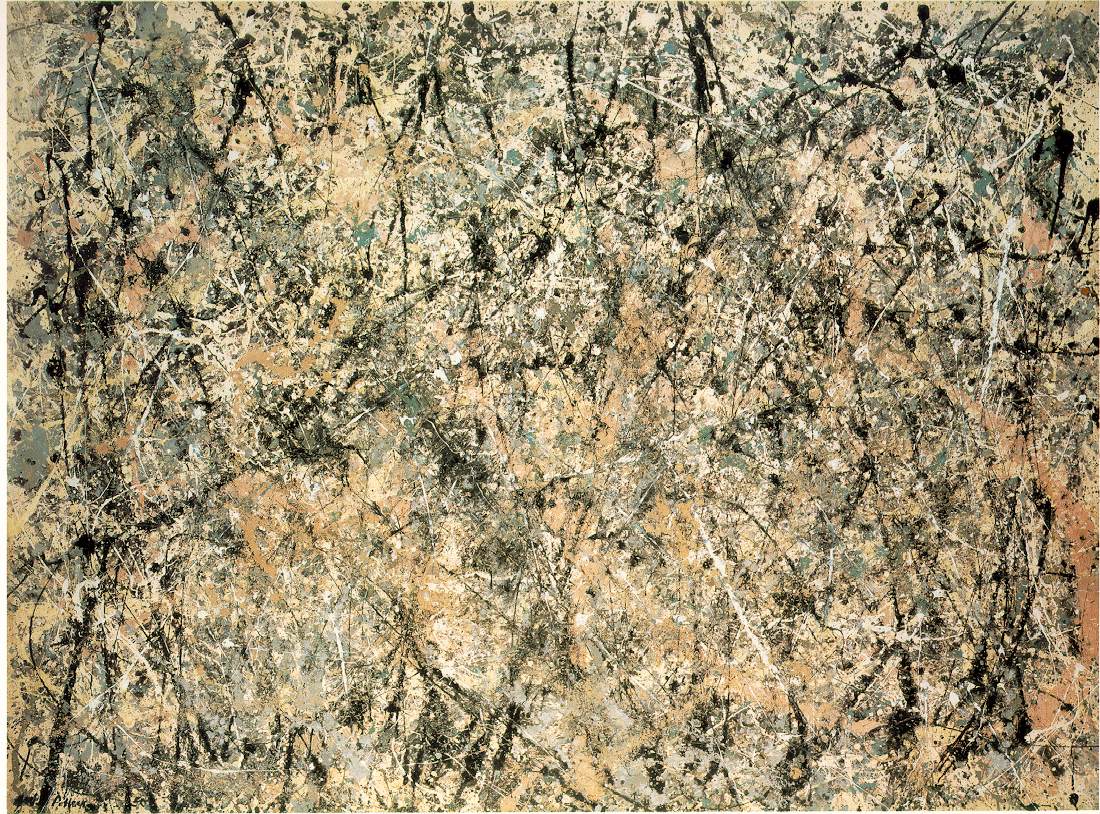
Kathryn Sullivan, wrote a haunting story about looking at a painting in a museum. Her mind wandered and she felt at peace as she approached the work. In her mind she imagined the work as peaceful and violent all at the same time. She felt that if she reached out, the painting might heal her. She was transfixed and drew closer. Suddenly alarms sounded and a guard asked her to step away from the painting. She had reached out and touched a Jackson Pollock painting. The painting was titled "Lavender Mist."

If I Had My Way by Joseph Hayes


If I Had My Way was written by local playwright Joseph Reed Hayes. This reading of the play at the Winter Park Playhouse was funded in part with a development grant from United Arts of Central Florida. The play is set in Central Florida in 1945 at a time when there was a POW camp where the Kissimmee airport is now located. Margaret Perry had left her southern home and was educated in Atlanta and New York. Her mother lived her whole life in the ranch home in Central Florida and when she became ill her daughter returned to take care of her. Margaret resented every aspect of having to work in the ranch taking care of her sick mother. She rejects friends and suitors until one day an Italian POW, bought to the ranch as replacement help, teaches her her the power of love though the beauty of fresh cooked food. Joseph read a section of the play in which Bernice, a young 19 year old woman who works in the kitchen, dreams about her future husband who she has yet to meet.
The play deals with bigotry and hate in the old South. Joseph says the play is influenced by the Blues and you can feel the lonely rhythm throughout. This is a serous play about lonely souls in hard times. Yet towards the end of the third act the actors talk about the scent of Orange blossoms which is a sweet smell that once experienced, is never forgotten.
I attended the reading because Darlyn Finch a local poet and friend had been asked to play the part of Mrs Alecia Jamison the ailing mother. Darlyn didn't have to act to pull off a convincing southern accent and she did fit the part perfectly. In a question and answer session following the reading Joseph explained that the play is still a work in progress. Some lines changed as he worked with the actors. Even in this early stage the play packs a punch and I felt deeply for each of the characters. I hope that when the play is presented on the stage for the first time I will be there to sketch.

Artists & Writers Crawl


The Artist & Writer Crawl I hosted made for a very fun evening. I met so many new artists and writers. After all the Crawlers saw "The Singing Menorah" we headed up to the Peacock Room at 1321 North Mills Avenue. I reloaded my water brush in the men's room an then sat at the end of the bar so I could get a good view down it's length. Karrie Brown and Tod Caviness are shown in the sketch diligently putting images and words to paper. Tisse Mallon followed the Crawl taking photos along the way. I would estimate that there were about 20 Crawlers all together. People came and went throughout the night. After a while it became impossible to distinguish the Crawlers from the regulars. A large group of people showed up, all of them coming from Bold Hype Gallery, where they saw the work of Andrew Spear. I spoke with someone named Nelson Martin who was trying to get the bartenders attention. It turns out he is a web designer and fine artist and we discussed art while I continued to sketch.
The walls of the bar were covered with paintings of women with really large eyes by Patrick Fatica. The work was highly polished, surreal and haunting. The paintings had long titles which would make you pause and wonder like "The angels have slipped through our landslide and filled up our garden with snow." This painting has a large eyed woman holding a towel over her bare breasts standing in front of a mist filled white landscape.
I had a beer at each bar we went to and after this sketch I focused a bit more on socializing than sketching. At the end of the evening only 5 artists remained. As we stumbled across the street from the Funkey Monkey towards Wally's we were almost all killed when a police car came screaming down Mills in the center turn lane at 90 miles an hour. It really was a close and sobering near miss. With our crossing attempt thwarted we had to run back to the sidewalk to avoid the new line of traffic approaching.
In Wally's I ordered my last beer for the evening from the sullen bar maid and sipped it while watching a man and woman who were rubbing noses and making out. When they left the woman tripped on a bar stool and could bairley keep her eyes open. Tod didn't like the music playing on the jut box so he got up and remedied the situation. It was 2AM when we all decided to call it a night.

7 Challenges Writers Workshop.

Phil Deaver and Lezlie Laws hosted a writers workshop at Rollins College. The focus for the day was to address the seven challenges that face writers. There is a different energy that is felt when you work in a room full of creative people. I feel it when I sketch.
Lezlie discussed reasons she has found to avoid writing. She pointed out that she had manifested hurricanes just to keep from sitting down and facing a blank page. What she usually does however is find busy work. She knows now that if she ends up straightening up in the garage, that she should be writing. She pointed out that when a writer is not writing, they are abandoning themselves.
Phil pointed out that he sits down to write even when he has nothing to write about. If writing were easy, then everyone would be doing it. He feels that the important thing is to turn on the spigot. The first sentences he writes are often useless but if he persists they will begin to work. Once the ideas begin to form, the writer can feel a wave of happiness. Phil said that a writer should try to work longer than they usually do, to write even when the ideas are not ready and fully formed. He pointed out that the struggle adds character to the final "sketch" or narrative. Writing is often like wandering into a dark cave without a flashlight. What you don't know will come to you. The artist needs to be open, not digging or forcing ideas into existence.
A quote was offered and I paraphrase, I treat writing like a rehearsal, I attempt to try out everything. I reject nothing. Lezlie and Phil had the students do a word association game that forced their brain to remain in the left brain mode, allowing for free association and creative thought. From a random list of words generated by the students they then assembled a paragraph and the results were surprising and strikingly visual.
Phil said that authors need to stay at the work table, if they do then everything would come to bear. If the author keeps pushing , then inspiration would come. It comes only when the author is wrestling the muse. The writer has to write about conflict. The story must deal with tensions exploring a dynamic arc. Revelations only come out of that conflict. The author must set the trap then spring it. Many authors promote an illusion by writing around the conflict. Many people are artful dodgers. A writer should not be afraid of failure, a writer should be afraid of not doing anything.

Shut Up And Write!

Mad About Words organized this writing event called "Shut up and Write". Mary Ann deStefano who runs Mad About Words usually hosts events where writers gather and talk about the process of writing. In some ways all this academic talk is just another form of procrastination. So Mary Ann organized this free event where writes gather and quietly write together. Besides this front room of Dandelion Communitea Cafe there were two other rooms in the back filled with writers at work. As I walked up to the cafe several writers even sat outside at the picnic tables and were tapping away on their laptops. Mary Ann said 22 people signed her sign in sheet but I am certain that many more authors came and went during the 3 hours of this writing event.
Since the room was so packed, I decided to lean against a wall in the doorway between rooms. I had to step aside each time a waitress would go by but it was worth it since this location offered me a great view of the entire front room. The interior of Dandelion is brightly colored and festive. The fellow in the foreground knew of my flickr page and I suspect he is also a blogger. A sign on the wall pointed out that the maximum occupancy is 49 people and this event made me think that maximum might be met.
Some authors left while others drifted in. A few were just here for dinner. A girl in the far corner leaned back in her chair after writing for an hour and exclaimed to her boyfriend "I have officially been productive today." The two of then then chatted for a while before getting back to work. Patricia an author that teaches a write your life workshop that I sketched last week, came in and asked me if I wanted a tea. I had a butter cup iced tea that has an interesting creamy taste. I really liked it. To say this event was a success would be an understatement. The arts are very much alive in Orlando.

Writing Your Life

I met Patricia Charpentier at a Cajun concert. Her last name definitely has a Cajun ring and she had researched her family history for many generations back. As I sketched at that concert she was looking over my shoulder and after the concert we talked for a while. I found out she teaches a writing workshop so I asked if she would mind if I sketched one of the classes.
Several months later when I arrived at the Marks Street Senior Center, I met Patricia in the parking lot and she showed me the way to the classroom. The Senior Center is a beautiful warm pink stucco building in a Spanish Colonial style.
The classroom quickly filled up and everyone introduced themselves and told a brief story about a unique incident that had happened in their life. Morrie told a harrowing story about living in the depression and not having enough food. He found a pear tree in an alley and returned that night to secretly pick some pears. Morrie's job was to keep watch while the other boys picked the pears. He realized he might not get any pears if he was just standing watch so he climbed up as well. Suddenly a huge burly man started yelling and all the boys ran for their lives. He got his pants leg caught on a fence post nail and hung upside down helpless. He kept quiet and thankfully that man never saw his legs above the fence. Later some rustling startled him again and it was the boys who came back to help get him down. Morrie has a small book published called "Sundays with Morrie".
The class was organized much like a sketch class with quick short exercises to begin and then longer writing sessions build upon the ideas discovered in the short exercises. After each writing session people would volunteer to read what they had written. Some of the stories were truly heart wrenching and others filled with joy. It was a wonderful sketching experience and I felt blessed to be able to hear these life stories.

Brian Turner Poetry Workshop

At the Kerouac House Brian Turner hosted a Ekphrastic Poetry workshop. Ekphrastic poetry is poetry that is inspired by works of visual art. Brian first spoke about his humble background. He grew up in a family of middle class intellectuals. His father used to read a book to the family at the diner table, but the family never discussed what was read. Brian put himself through college as a machinist. Later like his father he felt the need to serve his country in the military. When he was deployed to Bosnia and then Iraq he wanted need to learn about the country's culture and ways. As a soldier he had to be keenly aware of the environment and the pace of life in the villages and towns. If the pace of life changed something was wrong.
As an exercise Brian asked all the poets to walk through the house and pick and object to write a poem about. From all these separate poems he later compiled the group poem "Tonic".

Tonic

A lone gin bottle sitting on the headboard
labors to inspire the numbing dreams
which-out of love, like musicians
with their instruments laid down-
might serve to keep me company.

The air has turned electric-conducting
all that is about to happen. Through windows
of blue and grey-the air smells of rotten cabbage,
pond scum, rancid sweet fermenting,
stewing, the dark soul of a marriage
overcome by the hive of bees in sheet rock,
layers of winged frenzy sweetened
only by the magnolia out back.

If there's only one thing I have learned-
not from the wandering,
not from the traveling, and
not how Aristotle said it best-
it's how I move, most impressively,
alone. No one stretches me.

It is true. A bottle of gin is only lonely
when it is empty.

This collaborative poem was written by: Susan Shannon Spraker, B.J. Hart, Naomi Butterfield, Julie Dunsworth, Mary Ann deStefano, J. Northlake, Lorie Parker Matejowsky, Mary Elizabeth McIlvane, Kenny S. Murry, Gene Moore, Bernadette Adams Davis, and Brian Turner.